



Is your front desk still using a paper logbook to track visitors?
In a fast-paced business hub like the UAE, that simple clipboard could be a major blind spot for your security, efficiency, and professional image. Modern businesses are switching to digital visitor management systems (VMS), and it’s about more than just looking tech-savvy.
A visitor management system is the digital gatekeeper that secures your premises, streamlines your front desk, and provides a level of accountability that paper simply can’t match. This article breaks down the seven key reasons why a VMS is no longer a luxury but a necessity for businesses across Dubai, Abu Dhabi, and the rest of the UAE.
What Is a Visitor Management System?
A visitor management system is a digital platform that replaces outdated paper logbooks with an integrated solution for electronic registration, identity verification, badge printing, and real-time visitor tracking. Deployed at building entry points, these systems give organizations complete visibility and control over who enters their premises, when they arrive, and why they’re there.
You’ll find these platforms in a wide range of facilities across the UAE, from corporate offices and government buildings to schools, healthcare facilities, and secure industrial sites. They’re designed to automate and secure the entire visitor journey, from pre-registration to check-out.
Digital Visitor Management vs. Paper Logbooks: What's the Difference?
The upgrade from a paper log to a digital VMS is transformative. Here’s a direct comparison of the key differences:
| Feature | Paper Logbook | Digital Visitor Management System |
|---|---|---|
| Security | Manual entries that can be forged, altered or misplaced. No identity verification or real-time security alerts. | Secure ID scanning, watchlist screening, visitor authentication and seamless access control integration. |
| Accountability | Handwritten records can be illegible, damaged, lost or modified, making audits difficult. | Centralized, time-stamped digital visitor logs with secure storage, quick search and complete audit trails. |
| Visitor Experience | Slow manual sign-in process, long reception queues and an outdated visitor registration experience. | Fast self-service check-in using kiosks, QR codes, pre-registration and automated visitor notifications. |
| Compliance | Limited ability to capture NDAs, safety acknowledgements or policy acceptance consistently. | Digital NDAs, health declarations, consent forms and compliance records with legally auditable documentation. |
| Reporting & Analytics | No automated reporting. Visitor counts require manual tracking and are prone to errors. | Real-time dashboards, visitor analytics, peak-hour trends, host activity reports and exportable management reports. |
1. How Does a VMS Strengthen Security at Entry Points?
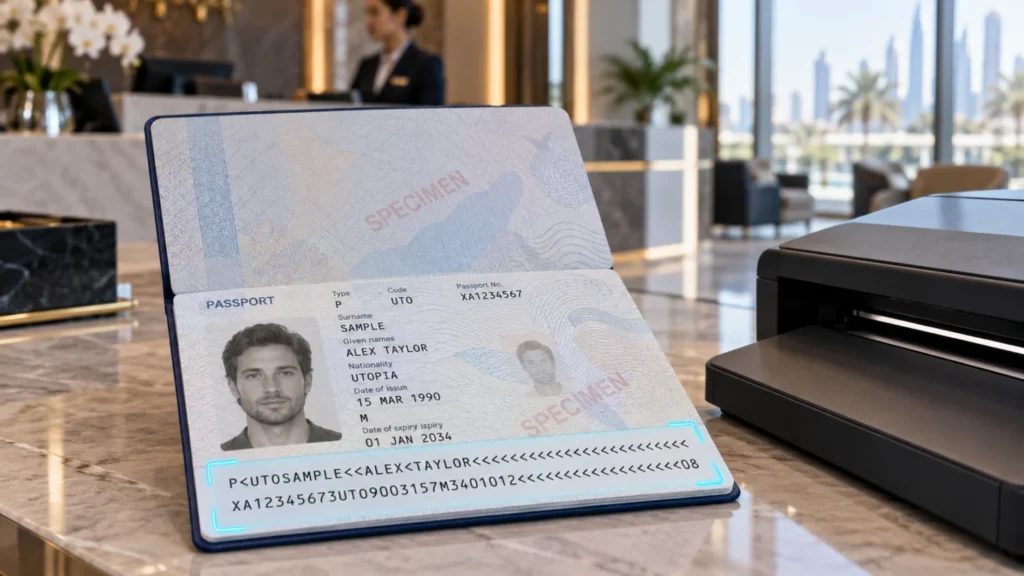
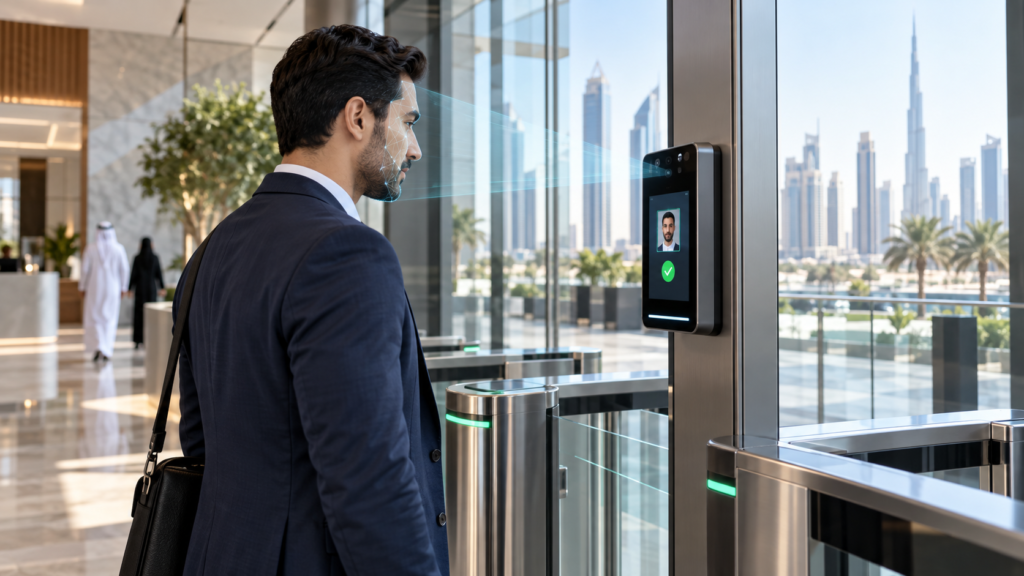
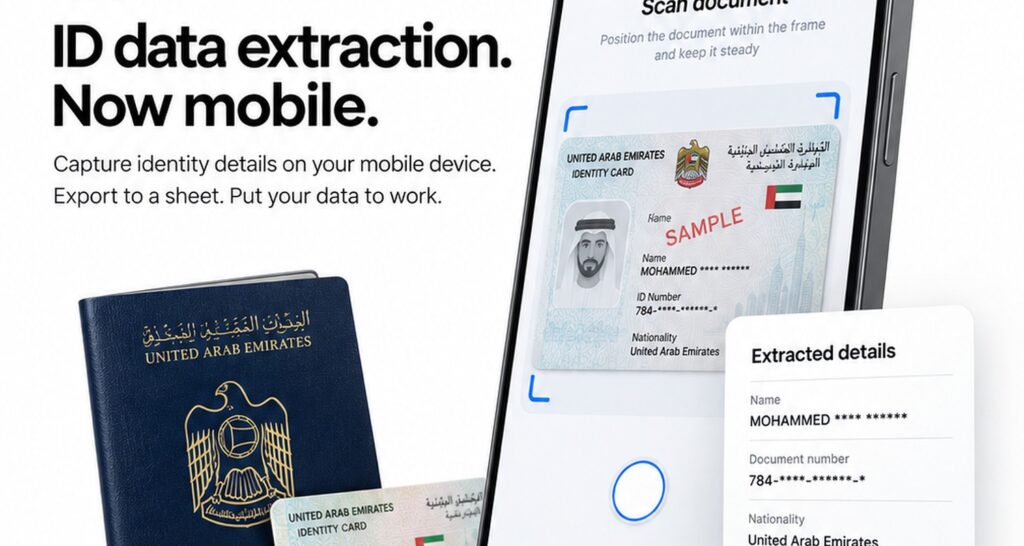
A visitor management system provides an immediate and significant security uplift. It replaces unverifiable handwritten logs with a structured workflow that confirms every visitor’s identity. Top-tier platforms support ID scanning, check visitors against internal watchlists, and can even integrate directly with your building’s turnstiles and door controllers. This ensures that only verified, approved individuals can access sensitive areas—a critical function for multi-tenant commercial towers and government-adjacent facilities in Dubai and Abu Dhabi.
Custom-printed badges reinforce this security layer. On-site staff and security guards get a clear visual signal of who is authorized to be there. These temporary badges typically display the visitor’s name, photo, host details, and designated access level, making it easy to distinguish authorized guests from unverified individuals in a busy workplace.
A VMS consolidates these security actions into one seamless workflow:
- ID scanning and identity verification at check-in
- Screening against internal or external watchlists
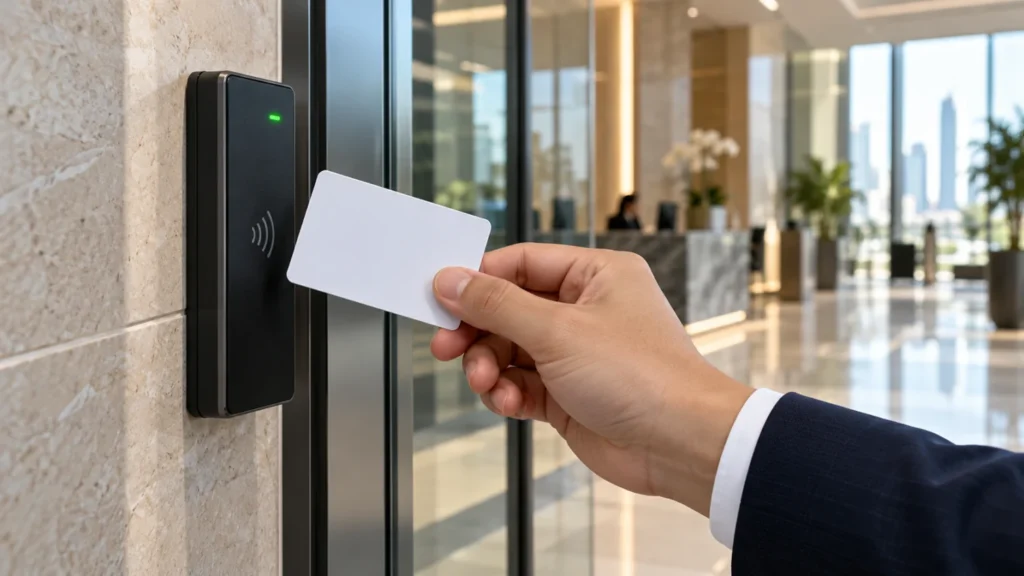
- Integration with turnstiles and electronic door locks
- On-the-spot temporary badge printing with photo and access details
- Real-time arrival alerts sent directly to host employees
2. Why Is Digital Visitor Tracking and Accountability Better?
A digital VMS creates a centralized, time-stamped log of every single visit. It captures names, contact details, the purpose of the visit, host information, and precise entry and exit times. This level of structured data is impossible to achieve with paper logbooks, which are prone to being misread, altered, or lost. For UAE organizations, this digital audit trail is crucial for supporting incident investigations and internal governance reviews.
If a security incident happens, your facility manager can instantly query the system to see who was on-site, which areas they accessed, and who they were there to see. This cuts investigation time from days down to minutes. Centralized data also helps you spot patterns—like repeat unannounced visits—that a manual system would never catch.
3. How Can a VMS Create a Faster, Smoother Check-In?
Nobody likes waiting in a lobby. Kiosk and tablet-based self-service check-ins let visitors register themselves, verify their identity, and get a badge without tying up your reception staff with manual data entry. You can speed things up even more by sending pre-registration links before a scheduled meeting. When the visitor arrives, their details are already in the system, cutting on-arrival processing time to almost zero. In high-traffic corporate offices across the UAE, eliminating these bottlenecks is key to making a great first impression.
Furthermore, touchless check-in options using QR codes have become a permanent expectation in the post-2020 workplace culture. Minimizing physical contact at entry points is a preference for many visitors and building managers, resulting in a faster, safer, and more professional arrival experience.
4. How Does a VMS Improve Your Professional Image?
The moment a client, partner, or auditor walks into your reception area, they’re forming an opinion about your business. A sleek, digital check-in kiosk immediately signals operational maturity and a serious investment in security and professionalism. The contrast with a messy paper logbook is instant and powerful. It tells visitors your organization values their time and takes security seriously—a critical message in the competitive business hubs of Dubai and Abu Dhabi.
For the UAE market, multilingual support is a must. Leading platforms offer user interfaces and printed badges in both Arabic and English, which is essential for serving the diverse mix of staff, contractors, and international visitors common in the region. This bilingual capability also aligns with the UAE’s consumer and regulatory frameworks, which often expect Arabic-language documentation.
5. What Kind of Audit Trails and Reports Can You Get?
A VMS doesn’t just record visitor data; it turns that data into actionable intelligence. It maintains a complete historical log of all visitor activity, which you can access through intuitive reporting dashboards. UAE organizations use these audit trails to pass compliance checks, demonstrate good governance to regulators, and even optimize staffing based on real-world visitor traffic. This transforms your reception from a simple cost center into a source of valuable operational insights.
Facility managers can analyze peak visit hours, see which departments are visited most often, and track contractor activity across multiple sites. For companies with offices in different Emirates, centralized multi-site reporting provides a level of operational oversight that paper-based systems could never replicate.
6. How Does a VMS Support Compliance and Internal Controls?
Meeting regulatory and internal compliance rules is non-negotiable. A VMS helps by digitizing crucial workflows right at the point of entry. You can configure the check-in process to require visitors to sign NDAs, acknowledge security policies, or complete health declarations. The system captures their electronic acknowledgment, creating a time-stamped record for your compliance files.
When deploying a VMS in the UAE, it’s also important to be aware of local regulations. Hardware like kiosks may need to comply with standards from the Emirates Authority for Standardization and Metrology (ESMA) or require Dubai Municipality product registration. Furthermore, the UAE Product Safety Law and Consumer Protection Law mandate clear product documentation and bilingual (Arabic and English) instructions, which applies to any VMS solution sold in the UAE.
7. Can a VMS Integrate with Existing Access Control Hardware?
Absolutely. Integrating a visitor management system with your existing access control infrastructure creates a single, unified security shield. By linking your VMS to door controllers and turnstiles, access rights are granted automatically based on a visitor’s pre-approved profile. This eliminates the need for security staff to manually grant access, reducing human error and closing a common security gap.
Badge printing integration completes the loop. The system generates and prints a temporary, photo-bearing badge that clearly shows where that visitor is permitted to go. For anyone managing a large facility or a multi-building campus in the UAE, this visual layer of control is a practical necessity.
Is a Visitor Management System Right for Your UAE Business?
A VMS is most valuable for any organization that deals with frequent outside visitors and has a responsibility for site security and regulatory compliance. The clearest candidates include:
- Corporate offices in Dubai and Abu Dhabi business districts
- Government entities with public-facing service centers
- Healthcare facilities managing patient, family, and contractor access
- Schools and universities with student safeguarding obligations
- Secure industrial, logistics, or data center sites
If you’re still using a paper logbook, the answer is simple: every limitation of your current process is directly solved by a digital VMS. Multi-tenant building managers also benefit immensely by managing visitor access for an entire building from a single dashboard.
An honest assessment makes it clear: for most UAE organizations, a digital VMS is the superior choice.
You should invest in a visitor management system if…
- Your facility regularly welcomes clients, contractors, or delivery personnel.
- You need verifiable audit trails for compliance, insurance, or governance.
- Your reception team is struggling with manual processes and visitor queues.
- You have access control hardware that could be integrated for better security.
- You operate in a market like Dubai or Abu Dhabi where a professional image is paramount.
You might not need one if…
- Your facility has fewer than five visitors per week and no strict compliance needs.
- Your entry points lack the space or power for a kiosk or badge printer.
- Your existing security team and processes already meet all your requirements.