Best Visitor Management System in the UAE for Secure Workplaces
What Is a Visitor Management System and Why Does It Matter in the UAE
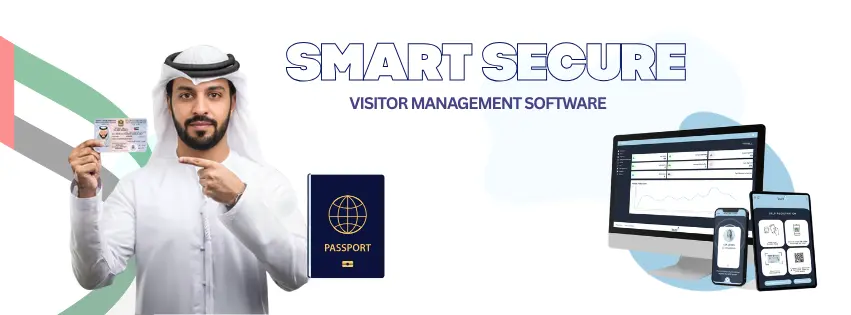
A visitor management system, often abbreviated as VMS, is a digital platform that replaces traditional paper logbooks with an automated workflow for registering, tracking, and managing every person who enters a facility. In the UAE, where commercial buildings, government offices, free zones, and multinational headquarters operate under strict security expectations, a VMS serves as both a compliance tool and a front-desk efficiency upgrade.
Visitor Management System Highlights

Key Features
- Professional impression on your visitors
- Effectively automate your front-desk & visitors
- Visitor Registration Management
- Real-time Dashboard
- Automatically notify your visitors & hosts
- Comprehensive Centralized Report
- Harvest & Reuse your data
- Unlimited integration with external system

Reception Application
- Simple and Intuitive visitor que
- Registration of visitors
- Badge printing
- Delivery handling
- Appointment request and checking
- Dashboard of upcoming meetings
- Conference room schedule management
- SMS reminder
Why Visitor Management Systems Are Essential in UAE Facilities
A visitor management system is no longer a premium addition to UAE facilities but a baseline operational requirement for any organization that takes security, compliance, and visitor experience seriously.
Emirates ID and passport scanning integration is the most critical feature for UAE deployment, directly affecting check-in speed, data accuracy, and regulatory compliance.
Touchless check-in through QR codes and mobile apps has become the expected standard across Dubai and Abu Dhabi commercial buildings, eliminating shared surface contact and reducing reception bottlenecks.
Access control integration transforms the VMS from a standalone check-in tool into a connected security layer that issues, manages, and expires visitor credentials automatically.
Cloud-based deployments offer clear advantages for multi-location UAE organizations, providing centralized dashboards, automatic updates, and scalable architecture without additional hardware investment. Arabic language support across both visitor-facing and administrative interfaces is essential for serving the full spectrum of UAE visitors and staff.
The quality of local vendor support within UAE time zones is a decisive factor that separates functional deployments from frustrating ones, particularly during integration and post-launch optimization.
Visitor Management Software- Enterprise-Grade Security Integrations
Emirates ID and Passport Integration
The most important thing for any visitor management system used in the UAE is that it can scan Emirates ID cards and passports. This doesn’t help make things easier. It is a functional requirement that determines if the system can operate within the area’s security and regulatory regulations.
The technology can read the information on the Emirates ID card and get the visitor’s name, country, ID number, and photo. It can then automatically fill out the check-in form for them. This gets rid of mistakes that can arise when users type in information by hand, speeds up check-in to just a few seconds, and makes sure that all visitor records have the right information from the government. Scanning passports does the same thing for those from other countries who don’t have an Emirates ID. It uses optical character recognition to read the machine-readable zone and retrieve the information right away.
This integration will change the way things work a lot. For a building with more than fifty visitors a day, the difference between a thirty-second automated check-in and a three-minute human check-in saves reception staff hours of effort every week. More importantly, it creates a compliance record that can be contested. The system can provide information about who entered the building on a specific day, together with timestamps, pictures, and links to papers.
Strong integration of Emirates ID and passport includes automatic data extraction from the Emirates ID chip or barcode, optical character recognition for passport machine-readable zones, real-time photo capture paired with the scanned document data, instant watchlist screening against internal or shared databases, secure encrypted storage of identification records in compliance with data protection standards, and seamless handoff of verified data to the badge printing module.
Touchless Check-In and Real-Time Host Notifications
The second most helpful set of features in a visitor management system used in the UAE is the combination of touchless check-in options and notifications for the host in real time. These two characteristics work together to make the arriving experience more modern while still keeping things functioning smoothly.
Touchless check-in became a basic demand throughout the epidemic years, and it has kept that way in UAE workplaces. Sending QR codes by email or text message as part of the pre-registration process is the most common way to use them. The visitor scans the code at a kiosk or on their phone and checks in without touching anything that other people could have used or chatting to reception staff. Some systems go even further by letting customers check in with their phones, use facial recognition, or use NFC to go in.
Real-time notifications for hosts close the loop. The system sends the host a push notification, SMS, email, or WhatsApp message as soon as a visitor checks in to let them know that their guest has arrived and is waiting. In major corporate offices in the UAE, where the host might be in a meeting room several floors away, this takes rid of the awkward circumstance where a guest has to wait at reception for ten or fifteen minutes while someone tries to call the host. The message is sent right away and contains the visitor’s name and photo. Some systems even let you let someone in or not with only one press.
These traits work together to make the front desk a fluid flow point instead of a bottleneck. The professionals at the front desk go from checking in each guest by hand to overseeing a self-service process, only stepping in when something goes wrong.
System Architecture and Interface Design
Most visitor management systems nowadays are cloud-based, but some companies offer hybrid or on-premise versions for enterprises that need to keep their data in one location. For buyers in the UAE, the architectural option is significant since it affects how the system handles many locations, updates software, and stores data.
Centralized dashboards are part of cloud-based systems. They let a facilities manager in Dubai see what visitors are doing at branches in Abu Dhabi, Sharjah, and Ras Al Khaimah all at once. The system can grow without having to acquire extra hardware, and updates happen on their own. New features appear without having to be installed. The downside is that the data is held on servers outside of the company. Some government and financial companies in the UAE may need to examine their own requirements for data governance against this.
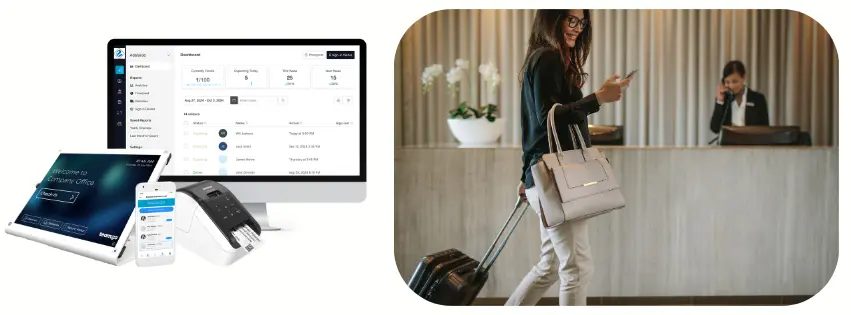
Most of the time, the interface runs on iPads or other commercial tablets that are either on reception desks or on the floor. Visitors don’t require any training to check in. With big buttons, clear instructions in English and Arabic, and a step-by-step process, the visitor can scan their ID, take a picture, sign an NDA or safety acknowledgment, and print their badge. The administration dashboard is available to facility managers and security personnel. It offers real-time occupancy data, historical visit logs, peak visit times analytics, and emergency evacuation lists.
The footprint of the hardware is modest. A standard setup includes one or two tablets at the front desk, a badge printer, and an optional ID scanner. The complete thing takes up less space than a traditional pen holder and reception logbook.
Connectivity and Integration with Existing Infrastructure
A visitor management system needs help to work. It becomes much more useful when it interacts with the UAE site’s existing security, communication, and workplace infrastructure.
Access control integration is the most critical relationship. As soon as a visitor checks in and is accepted, the VMS should be able to issue them a temporary access credential, such as a paper badge with a barcode, a QR code for scanning at a turnstile, or a mobile credential emailed to the visitor’s smartphone. This credential only permits you enter particular areas, and it will stop working after the visit is over. The visitor doesn’t need a separate badge from security because it works with the best access control systems. The access log and visitor record are also combined.
The notification channels are a part of integrating communication platforms. Systems that interact with Microsoft Teams, Slack, WhatsApp Business, and standard SMS gateways make sure that host notifications get to the proper person through the channel they use most often. WhatsApp integration is highly helpful in the UAE market because a lot of people use it for both commercial and personal communication.
Calendar and workspace integration may allow the VMS to collect visitor information directly from meeting invites in Outlook or Google Calendar. This implies that the host doesn’t have to enter the same information twice for visitors who are due to arrive. Some systems go even farther and link a visitor’s arrival to a reservation for a specific meeting room on a platform for booking workspaces.
The last thing to consider about when it comes to connecting is whether or not APIs are available. If your firm has its own security systems, enterprise resource planning systems, or databases, you need a VMS with a well-documented API for making custom interfaces. This is quite crucial for big UAE businesses that engage in regulated areas like banking, healthcare, and government services.
Who Should Buy a Visitor Management System in the UAE
Any firm that has visitors from outside and cares about safety, following the rules, and keeping things operating efficiently is the quick answer. The longer answer is to make sure that the technology can do what the business needs it to do.
Corporate offices in Dubai and Abu Dhabi that have fifty or more visits every day will get the fastest return on their investment. The automated compliance records, the lack of paper logbooks, and the time saved at reception make it almost mandatory to adopt right immediately. This contains the headquarters of many companies in DIFC, Dubai Internet City, and the Abu Dhabi Global Market. A digital check-in process also helps people think better of your business by making it look professional.
Government and semi-government groups in the UAE have to obey stricter laws for security. Emirates ID integration, watchlist screening, and long audit trails will help them the most. Schools and institutions, especially those from other countries, need to keep track of who is on campus and make sure kids are protected. Healthcare facilities must monitor visitors to prevent the transmission of infections, safeguard patient privacy, and comply with legal regulations.
For industrial and logistical activity in regions like the Jebel Ali Free Zone and the Khalifa Industrial Zone, VMS solutions that interact with safety induction modules are needed. This makes sure that every contractor or delivery driver knows about the dangers on the site before they get to the regions where they will be working.
Even small businesses, coworking spaces, and serviced offices in the UAE can benefit from visitor control solutions. This is especially true for businesses that offer multi-tenant arrangements, where different companies on the same floor can handle their own visitor schedules.
A Guide to UAE Visitor Management Systems for Buyers
A Visitor Management System (VMS) in the UAE helps businesses securely manage and track visitor entries using digital check-in, ID verification, and real-time monitoring. For buyers, the key is to choose a system that offers features like Emirates ID integration, badge printing, access control compatibility, and cloud or on-premise flexibility. A well-chosen VMS improves security, ensures compliance with UAE regulations, and creates a smooth, professional visitor experience.
What Is the Visitor Management System Price in UAE
Visitor management system pricing in the UAE varies based on the number of locations, visitor volume, integration requirements, and whether the deployment is cloud-based or on-premise. Because these systems are configured to match specific organizational needs, standardized pricing does not reflect the true cost of a properly deployed solution.
Pricing is available on request through etopme.ae, along with current availability, bundle options, and full UAE warranty support. The team can advise on the right configuration for your facility size, visitor volume, and integration requirements. Always purchase from an authorised seller to ensure valid UAE warranty and after-sales support.
Is a cloud-based VMS better than an on-premise system for UAE businesses?
Cloud-based solutions are preferable for most UAE businesses, especially those that have more than one location or want to develop. This is because they make it easy to manage everything from one place, automatically update software, and save money on hardware. For single-site installations in high-security zones where data needs to stay on local infrastructure, on-premise systems are better. Your security rules and plans for growth will help you choose the ideal one for you.
Can a visitor management system integrate with existing access control in UAE buildings?
Yes, modern visitor management systems are designed to integrate with leading access control platforms through APIs. This allows the VMS to issue temporary access credentials to visitors, control which zones they can enter, and automatically revoke access when the visit ends. Integration capability should be verified against your specific access control hardware before purchase.
Passport Scanner Integration
Enhance your identity verification capabilities with integrated passport scanning functionality, allowing your organization to capture and verify both Emirates ID and international passport documents through a unified software solution.
Industries Using VMS Software in UAE
Digital Check-In with Wacom Signature Pad & Contactless Experience
Enhance your visitor journey with digital consent and document signing using Wacom signature pads. Visitors can review policies, sign NDAs, and complete registration digitally at kiosks or reception desks. Combined with Emirates ID scanning, this creates a fully paperless and contactless check-in process that is fast, secure, and compliant. The result is a smooth, modern experience that reflects your organization’s commitment to innovation and professionalism.
Seamless Integration with Access Control, Turnstiles & Speed Gates
A powerful VMS goes beyond registration by integrating directly with access control systems, turnstiles, and speed gates. Once a visitor is registered using Emirates ID card reader software, the system can automatically generate temporary access permissions. This allows authorized entry through secure gates and controlled areas without manual intervention, improving both security and operational efficiency. Businesses in Dubai and across the UAE benefit from real-time monitoring, controlled access, and complete audit trails for every visitor movement.
Modern Visitor Management Software Integrated with Emirates ID & Access Control in UAE
Organizations across the UAE are transforming front-desk operations with advanced Visitor Management Software (VMS) powered by Emirates ID card reading technology. By instantly scanning Emirates ID cards, businesses can capture verified visitor data, eliminate manual entry, and ensure compliance with UAE regulations. This creates a fast, secure, and professional check-in experience for guests, contractors, and tenants across corporate offices, residential towers, and commercial facilities.
Service
Scan, verify, and authenticate with confidence. Step into a smarter way of managing Emirates ID data today!
Strengthen your workflow with Emirates ID Reader Software — built for fast verification, seamless integration, and secure identity management. It’s the perfect solution for modern UAE businesses.
Instant ID Data Capture
Effortlessly extract all Emirates ID details within seconds for faster customer processing.
Accurate Chip-Level Verification
Verify identity directly from the Emirates ID chip to ensure secure and error-free authentication.
Seamless System Integration
Connect Emirates ID data to your CRM, ERP, HR, or VMS with smooth API integration.