

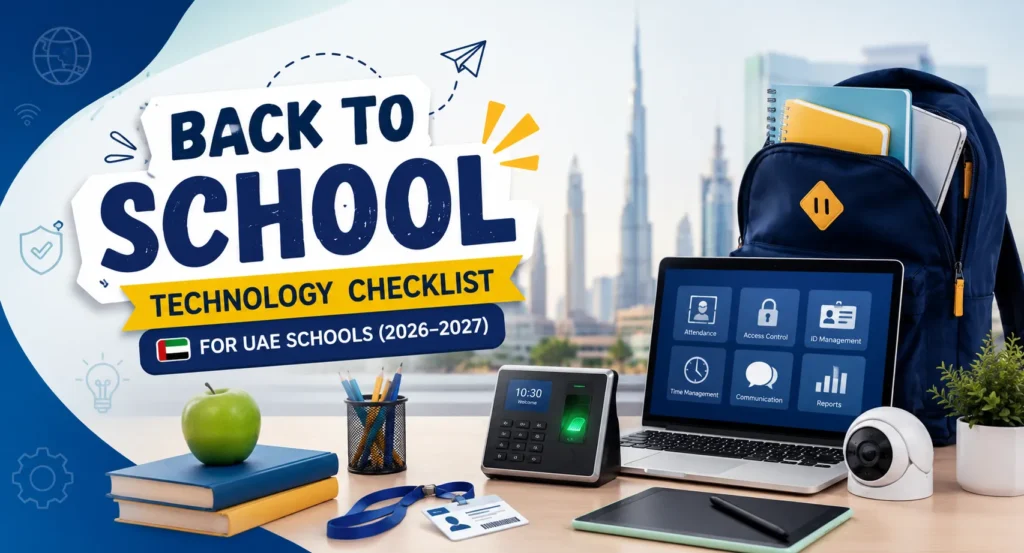

This guide explains how fingerprint attendance systems work, why businesses across the UAE are replacing manual registers and swipe cards with biometric time tracking, and what to look for when selecting a solution. By the end, you will have a clear picture of the right deployment approach for your industry and workforce size.
Key Takeaways
- Eliminates Time Theft: Biometric verification binds clock-in events to the individual, structurally eliminating “buddy punching.”
- MOHRE & ECAS Compliance: Meets UAE Ministry of Human Resources and Emiratisation (MOHRE) standards and Emirates Conformity Assessment Scheme (ECAS) certification rules.
- Seamless Payroll Integration: Automated timestamp records feed directly into HRIS and payroll software, eliminating manual data entry and pay disputes.
- Versatile Industry Applications: Ideal for offices, construction sites, factories, retail, healthcare, logistics, and educational institutions across the UAE.
What Is a Fingerprint Attendance System and How Does It Work?
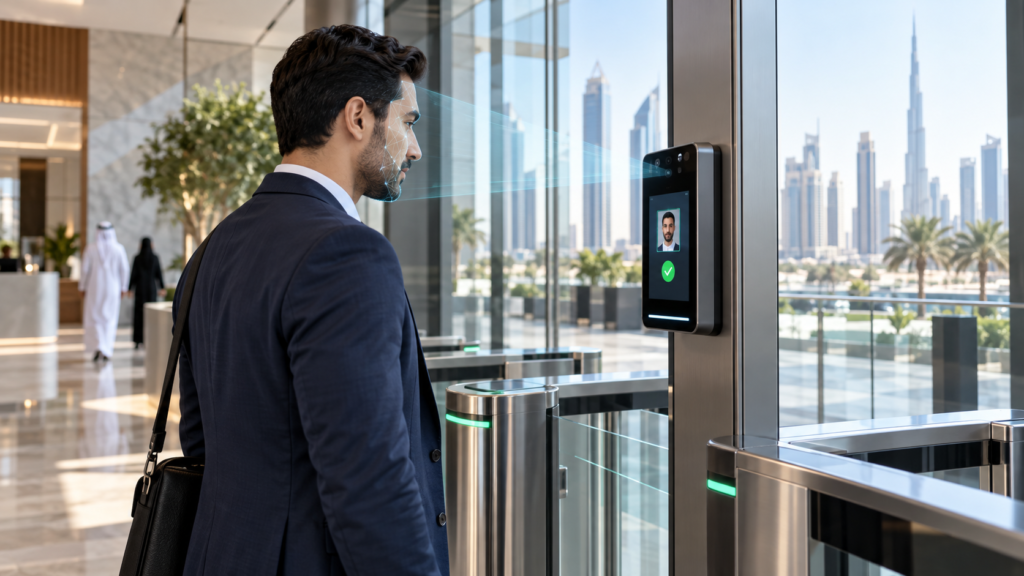
A fingerprint attendance system is a biometric workforce tracking solution that matches an employee’s unique fingerprint to a stored record to confirm their identity and log their attendance in real time. Unlike swipe cards or PIN-based clocks, the system requires the physical presence of the specific individual being verified. This single distinction eliminates an entire category of attendance fraud before it can occur.
The core process follows three steps:
- Scanning: The device scans the fingerprint at clock-in or clock-out.
- Matching: The biometric template is matched against the enrolled database.
- Logging: The timestamp is recorded automatically against that employee’s profile.
This means no manual data entry, no paper registers, and no disputed records at month end.
Why Is Fingerprint Attendance More Accurate Than Traditional Methods?
Fingerprint-based attendance systems match unique biometric identifiers to employee records, removing the manual errors that accumulate in paper-based or card-swipe systems. Each fingerprint is biologically unique, which means the system cannot confuse one employee for another under normal operating conditions. This matters directly in the UAE, where accurate attendance records underpin compliance with labour regulations and payroll precision required by the Ministry of Human Resources and Emiratisation (MOHRE).
Traditional swipe cards can be forgotten, shared, lost, or cloned. PINs can be shared or observed. Neither method confirms the physical presence of the actual employee. A fingerprint attendance system eliminates this vulnerability entirely by binding the clock-in event to the individual’s body rather than an object they carry.
What Are the Key Benefits of a Fingerprint Attendance System for UAE Businesses?
The strongest operational benefit of a fingerprint attendance system is the elimination of buddy punching — the practice of one employee clocking in on behalf of an absent colleague. Buddy punching inflates payroll costs, distorts productivity data, and creates compliance risk under UAE labour law. Because biometric time clocks require the physical presence of the employee, this form of time theft becomes structurally impossible.
A fingerprint attendance system delivers five additional measurable benefits for UAE businesses:
- Faster check-ins at shift changes: Biometric authentication is faster than manual sign-in, reducing bottlenecks in high-density workforces such as construction and logistics sites.
- Cleaner payroll data: Attendance records feed directly into payroll calculations, reducing manual reconciliation and pay disputes.
- Auditable records for MOHRE compliance: Automated logs create a verifiable attendance trail that supports inspections and audits under UAE labour regulations.
- Reduced administrative overhead: HR teams spend less time correcting errors, chasing missing timesheets, or resolving disputes about hours worked.
- Improved access control: Many deployments combine attendance tracking with controlled access to restricted areas, particularly relevant in healthcare and logistics environments.
What Are the Best Use Cases Across UAE Industries?
A fingerprint attendance system is applicable across virtually every sector that employs shift workers, contracted staff, or large teams. The deployment context determines the form factor and software requirements, but the core biometric principle remains the same.
| Industry | Operational Requirement & Deployment Benefit |
|---|---|
| Offices & Corporate Environments | Ideal for office buildings requiring biometric employee attendance, HRIS integration, automated payroll processing and secure access control for everyday workforce management. |
| Construction Sites | Rugged biometric attendance systems withstand dust, heat and harsh outdoor environments while accurately tracking contractors, labourers and temporary workers across multiple project sites. |
| Factories & Manufacturing | Supports shift-based workforce management, production scheduling, zone-based access control and accurate attendance records to improve operational efficiency. |
| Retail Stores & Multi-Branch Businesses | Centralised cloud attendance software enables HR teams to monitor staff attendance across multiple outlets in real time, reducing manual administration. |
| Schools, Colleges & Universities | Automates student and staff attendance while strengthening campus security through biometric identity verification and controlled building access. |
| Hospitals & Healthcare Facilities | Delivers precise employee attendance tracking together with secure access to pharmacies, laboratories, operating theatres and other restricted medical areas. |
| Logistics, Warehousing & Distribution Centres | Handles large shift-based workforces with fast biometric verification, eliminating buddy punching, reducing payroll errors and improving workforce productivity. |
What Features Should You Look for in a Fingerprint Attendance System?
Selecting the right fingerprint attendance system requires evaluating hardware reliability, software integration capability, and scalability for your workforce size. Not all biometric devices perform equally under real-world UAE conditions, including heat, dust, and high-traffic shift changes.
These are the critical features a UAE buyer should evaluate before purchasing:
- Authentication speed: Fast fingerprint matching reduces queuing at shift changes, which is critical for large workforces.
- User capacity: The device must support your total enrolled employee count with room for growth.
- Durability and environmental rating: Outdoor and industrial sites require ruggedised hardware rated for dust and temperature variation.
- Software integration: Confirm the system connects with your existing HRIS or payroll platform to automate data flow.
- Cloud or on-premise options: Multi-site businesses benefit from cloud-based platforms that centralise attendance data across locations.
- Compliance certification: Hardware imported into the UAE must meet Emirates Conformity Assessment Scheme (ECAS) requirements under the Ministry of Industry and Advanced Technology (MOIAT).
How Does a Fingerprint Attendance System Support HR and Payroll Operations?
A fingerprint attendance system does more than record clock-in times — it creates a structured, auditable data layer that HR and payroll teams can use directly. When biometric attendance data integrates with an HRIS or payroll platform, overtime calculations, leave deductions, and shift differentials are applied automatically rather than manually.
This integration is particularly valuable in the UAE, where employers must maintain accurate, auditable payroll records to satisfy Ministry of Human Resources and Emiratisation requirements. Integrated systems lower administrative overhead and reduce the risk of errors or omissions during labour inspections. The result is faster payroll processing, fewer disputes, and a cleaner audit trail across the employee lifecycle.
Who Should Buy a Fingerprint Attendance System in the UAE?
A fingerprint attendance system is the right investment for any UAE business managing more than 20 employees across one or more sites where manual or card-based attendance has created payroll errors, buddy punching incidents, or compliance gaps. The return on investment is strongest where shift volumes are high and HR resources are limited.
Primary Buyer Profiles:
- HR Managers in Dubai and Abu Dhabi: Corporate offices seeking MOHRE-compliant attendance records.
- Operations Managers: Construction and logistics sites managing large contractor workforces.
- School Administrators: Institutions tracking both staff and student presence.
- Healthcare Facility Managers: Hospitals and clinics requiring combined attendance and access control.
Businesses planning to scale headcount in the next 12 to 24 months benefit from deploying a fingerprint attendance system early, as migrating from manual records later is significantly more disruptive than implementing biometrics from the outset.
Frequently Asked Questions
What is a fingerprint attendance system and how does it differ from a swipe card system?
A fingerprint attendance system is a biometric workforce tracking solution that uses an employee’s unique fingerprint to verify identity and log attendance automatically. Unlike swipe card systems, a fingerprint attendance system requires the physical presence of the actual employee, making it impossible for a colleague to clock in on their behalf. This fundamental difference makes biometric systems significantly more accurate and fraud-resistant than card or PIN-based alternatives.
What is the fingerprint attendance system price in UAE?
Fingerprint attendance system pricing in the UAE depends on device specifications, user capacity, software licensing, and whether the deployment is cloud-based or on-premise. Pricing is available on request through eTOP, along with bundle options, multi-site configurations, and full UAE warranty support.
Where can I buy a fingerprint attendance system in Dubai?
A fingerprint attendance system can be sourced in Dubai through eTOP, ECAS-compliant hardware, Arabic-language documentation, and post-sale technical support. Buyers in Dubai should confirm that any device procured carries the required Emirates Conformity Assessment Scheme (ECAS) certification before deployment.
Does a fingerprint attendance system come with UAE warranty support?
Warranty terms for fingerprint attendance systems vary by manufacturer and supplier. When purchasing through eTOP, buyers can confirm current UAE warranty coverage, service terms, and support options as part of the procurement process.
Is a fingerprint attendance system suitable for outdoor and construction site use?
A fingerprint attendance system can be deployed on construction and outdoor sites provided the selected hardware carries an appropriate environmental protection rating for dust and temperature. UAE construction and logistics sites require ruggedised biometric devices rated for the local climate. Buyers should specify their deployment environment when requesting a recommendation from eTOP.
How does a fingerprint attendance system integrate with payroll?
A fingerprint attendance system records verified clock-in and clock-out timestamps that can be exported or directly integrated with HRIS and payroll platforms. This integration automates overtime calculations, leave deductions, and shift reporting, reducing manual reconciliation work. For UAE businesses, this creates the auditable payroll records required for compliance with Ministry of Human Resources and Emiratisation regulations.