

What Is a PVC Card?
A PVC card is a plastic card made from polyvinyl chloride, the standard material for employee ID badges, access cards, student IDs, membership and loyalty cards. Most PVC cards are made in the same credit-card size, so they fit desktop ID card printers, card holders and readers used across Dubai and the UAE.
PVC is popular because it is durable, low cost and takes full-colour printing well. Cards come blank for in-house printing, or with a proximity chip, magnetic stripe or contact chip already built in.
Short answer: for everyday photo IDs, standard white PVC cards are enough; choose composite PVC or chip cards when the card must survive heat, lamination or daily tapping on readers.
PVC Card Size and Thickness
The standard PVC card size is CR80, which follows the ISO/IEC 7810 ID-1 format: 85.60 × 53.98 mm, the same as a bank card. This is the size almost every ID card printer, badge holder and card reader is designed for.
- 30 mil (0.76 mm): the standard thickness for ID badges and access cards, and the thickness of a typical bank card.
- Thinner cards: used for adhesive-backed labels and some loyalty cards. Check that your printer supports the thickness before ordering.
- Thicker cards: clamshell proximity cards are much thicker and usually cannot pass through a desktop printer; they are labelled with an adhesive sticker instead.
Every printer lists its supported card thickness range on its datasheet. Match the card to that range, not the other way around.
Types of PVC Cards
Blank white PVC cards
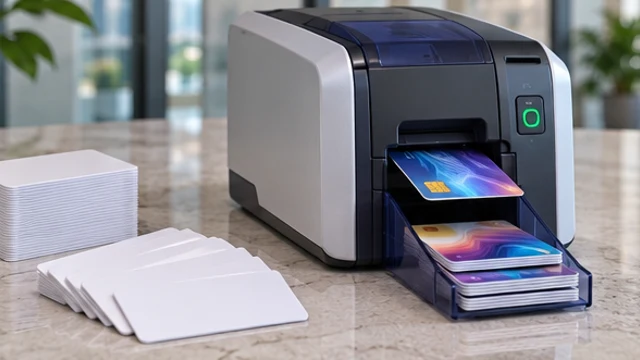
Plain white cards with a glossy surface, ready for printing. They are the right choice for visitor passes, event badges, membership cards and photo IDs that do not need a chip.
Composite PVC cards
Composite cards combine PVC with a polyester (PET) layer. They resist heat and bending better than pure PVC, which is why they are often recommended for retransfer printing and for cards that will be laminated.
Proximity and RFID PVC cards
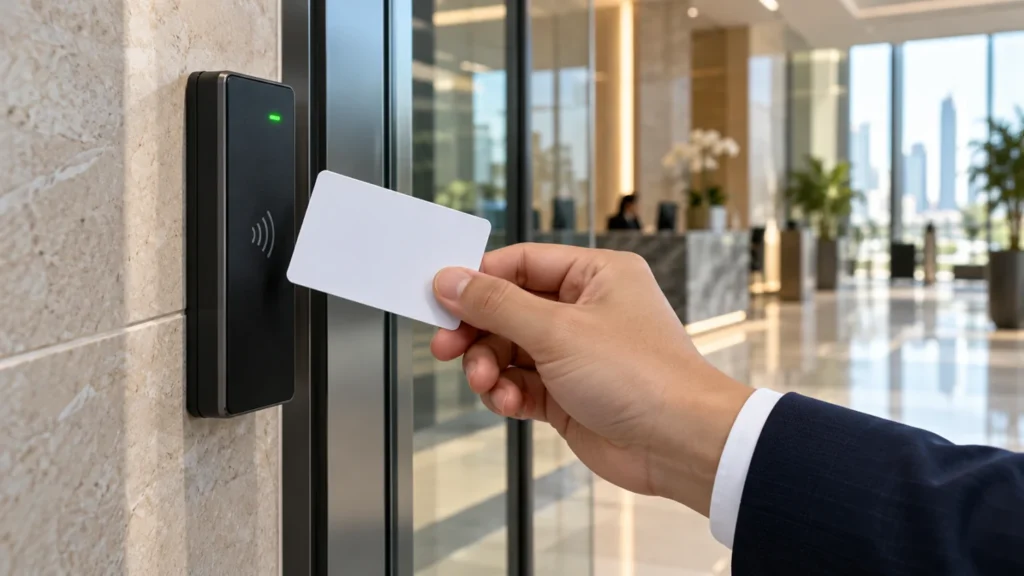
These cards have an antenna and chip inside the plastic, so the same card works as a photo ID and an access card. See our RFID card guide for the difference between 125 kHz proximity and 13.56 MHz smart cards, and our HID proximity cards.
Magnetic stripe and contact chip cards
Magnetic stripe cards store data for cashless payment, canteen and loyalty systems. Contact chip cards carry a gold chip module for secure login and stored data. Both need a printer fitted with the matching encoder if you want to write data during printing.
Adhesive-back PVC cards
Thin PVC cards with a peel-off back that stick onto a clamshell proximity card or key fob, adding a printed photo and name to a card that cannot be printed directly.
How PVC Cards Are Printed
Desktop card printers use one of two methods.
- Direct-to-card (dye-sublimation): the printhead transfers colour from a ribbon straight onto the card surface. A YMCKO ribbon prints yellow, magenta and cyan for photos, black resin (K) for sharp text and barcodes, and a clear overlay (O) that protects the print. It is the most common and economical method.
- Retransfer: the printer first prints onto a clear film and then bonds that film to the card. It prints over the edge of the card and handles uneven surfaces such as chip and proximity cards better. It costs more per card but gives a higher-end finish.
For bank and government-style cards, embossing and laser engraving are used instead of, or alongside, colour printing. See our ID card embossers and the LC-200 desktop card laser engraver.
PVC Card Types Compared
| Card type | Best for | Print method | Watch out for |
|---|---|---|---|
| Blank white PVC | Photo IDs, visitor passes, membership cards | Direct-to-card | Surface must stay clean and dust-free |
| Composite PVC/PET | Long-life IDs, laminated cards | Retransfer or direct-to-card | Higher cost per card |
| Proximity / RFID PVC | Combined photo ID and access card | Retransfer preferred | Card technology must match your readers |
| Magnetic stripe PVC | Canteen, cashless and loyalty systems | Direct-to-card with encoder | Stripe coercivity must match the reader |
| Adhesive-back PVC | Labelling clamshell cards and fobs | Direct-to-card | Check the printer supports thin cards |
Choosing PVC Cards for Your ID Card Printer
- Use cards the printer maker approves: printer brands such as HID Fargo, Matica and Javelin publish the card types their printers are tested with. Off-spec cards are a common cause of poor colour and printhead wear.
- Match the ribbon to the job: full-colour photo IDs need a YMCKO ribbon; black text-only cards can use a cheaper monochrome ribbon. Ribbons, cards and cleaning supplies are listed on our ID card printer consumables page.
- Keep cards clean: dust and fingerprints cause white specks. Hold cards by the edges and run a CR80 cleaning card through the printer regularly.
- Store cards flat and cool: PVC can warp in heat, which matters in UAE summers. Keep stock sealed in its box away from direct sun.
- Plan the card design: card design software such as IDTOP lets you build templates and print from a database.
Printing PVC Cards In-House vs Using a Service
Printing in-house makes sense when you issue cards every week, need cards on the same day for new staff or visitors, or encode access chips yourself. A desktop printer and a box of blank PVC cards covers this.
A printing service suits one-off batches, very large print runs or special finishes. If you only need cards occasionally, see our ID card printing service in Dubai.
Frequently Asked Questions
What size is a standard PVC card?
A standard PVC card is CR80 size, 85.60 × 53.98 mm, defined by ISO/IEC 7810 ID-1. It is the same size as a bank card, so it fits standard ID card printers, badge holders and card readers.
How thick is a PVC ID card?
Most PVC ID cards are 30 mil, or 0.76 mm, thick. Thinner adhesive-back cards and thicker clamshell proximity cards also exist, so check the card thickness range your printer supports before ordering.
What is the difference between PVC and composite cards?
A composite card adds a polyester (PET) layer to the PVC. It handles heat and bending better, so it is preferred for retransfer printing, lamination and cards that must last for years.
Can I print on any PVC card?
No. Cards for desktop printers need a smooth, print-ready surface and the right thickness. Cards not made for card printers can give poor colour and damage the printhead.
Can a PVC card also work as an access card?
Yes. Proximity and RFID PVC cards have a chip and antenna inside, so you can print a photo ID on one side and use the same card on access control and attendance readers.