





Metal Detectors in Modern Security Systems
Gates and handheld scanners are examples of security devices that are important parts of modern security infrastructure. They are used in many different places to enhance safety and prevent unauthorized access.
Security gates are physical barriers usually installed at the entrances and exits of buildings, facilities, or off-limit locations. You can regulate foot and vehicle traffic through these gates by using turnstiles, sliding doors, or retractable barriers. These gates can be automated or staffed.
Security gates equipped with sensors and access control systems effectively manage entry permissions. They allow authorized personnel and block unauthorized individuals, providing a crucial layer of protection.
Why Metal Detectors Matter
Among the tools used in security infrastructure, metal detectors have proven essential for improving on-site safety. They can reliably detect concealed metal objects, making them invaluable in identifying and preventing threats.
Metal detectors are widely used in airports, government buildings, stadiums, corporate offices, schools, and shopping malls due to their ability to stop dangerous items from entering secure areas.
What Are Metal Detectors?
Metal detectors are electronic devices designed to detect the presence of nearby metal. When a metal object comes close to or passes through a detector, the device emits a signal or alarm, indicating a possible threat or contraband.
These detectors operate using electromagnetic principles, and are available in various types tailored to different environments and security needs.
How Do Metal Detectors Work?
Metal detectors create electromagnetic fields. When a metal object disrupts this field, the change is detected, and the system alerts the security personnel.
Different types of metals—such as ferrous, non-ferrous, and stainless steel—respond differently to these fields. As a result, the device’s sensitivity and detection range vary depending on its technical sophistication.
Types of Metal Detectors
1. Walk-Through Metal Detectors
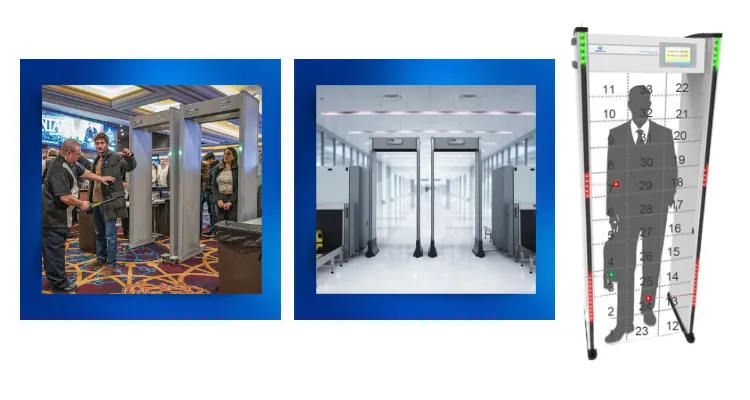
These are the large, gate-like detectors seen at airports, events, and public buildings. Individuals walk through them, and the system scans for hidden metal objects on their body.
Common Features:
- Multi-zone detection (to pinpoint object location)
- Adjustable sensitivity settings
- Integrated people counting systems
- Tamper-proof design
Walk-through detectors are ideal for high-traffic areas where speed and precision are critical.
2. Handheld Metal Detectors
Handheld metal detectors are portable scanners used by security personnel to inspect specific body parts or items. They are often used after a walk-through alarm is triggered or for random spot checks.
Advantages:
- Lightweight and easy to use
- Affordable
- Battery-powered or rechargeable
- High precision for detecting small metal items
- These are perfect for schools, small venues, and temporary inspection zones.
3. Ground Search Metal Detectors
Although not used for individual screening, ground metal detectors are essential for detecting buried or hidden metallic threats such as bombs, weapons, or metal fragments in forensic investigations.
WALK THROUGH METAL DETECTOR
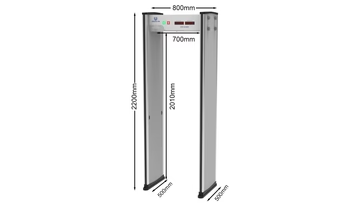
UB500 walkthrough metal detector is a highly versatile metal detection case door, with 18 zone and adjustable sensitivity The detection structure uses an electromagnetic field to detect the metal objects in the body. It consists of a host, a high-frequency signal generator, a signal receiver, and an infrared sensor. It is used for security inspection. It can speed up the detection efficiency during the project.
Key Features to Consider in Metal Detectors
Adjustable Sensitivity
Adjustable sensitivity allows the detector to distinguish between harmless items (e.g., keys, coins) and potential threats (e.g., knives, firearms). This is crucial for reducing false alarms in public spaces.
Multi-Zone Detection
Advanced walk-through models offer multi-zone detection, identifying where on a person’s body the object is located. This increases screening efficiency.
Interference Rejection
High-quality detectors are designed to function despite electrical interference from nearby devices or infrastructure—important for settings like airports and data centers.
Durability and Weather Resistance
For outdoor or rugged environments, metal detectors need to be weather-resistant and built from strong materials like stainless steel and reinforced polymers.
Integration with Access Control Systems
Some detectors can connect with CCTV, biometric readers, and smart gates, forming part of a complete access control system for real-time alerts and monitoring.
Applications of Metal Detectors in Security
Airports and Transit Hubs
Metal detectors here are highly sensitive and work in tandem with X-ray machines, facial recognition, and biometric systems to prevent weapons and contraband from passing through.
Schools and Educational Institutions
To improve campus safety, many schools and universities have implemented metal detectors at entry points, helping to prevent violence and smuggling.
Corporate Offices and Data Centers
To protect intellectual property and critical IT infrastructure, companies use metal detectors to prevent unauthorized devices or weapons from being brought inside.
Stadiums and Large Events
Metal detectors help maintain safety at concerts, sports events, and public gatherings. Their visible presence also acts as a deterrent to potential threats.
Government Buildings and Embassies
High-security areas often employ multi-layered protection. Metal detectors act as the first line of defense in these critical locations.
Benefits of Metal Detectors in Security Systems
- Enhanced Safety – Quickly identifies hidden threats
- Efficiency – Speeds up entry checks
- Non-Invasive – Respectful and contactless
- Cost-Effective – Affordable and low maintenance
- Public Confidence – Creates a sense of safety for employees and visitors
Challenges and Limitations
Despite their effectiveness, metal detectors come with some limitations:
- False Alarms – Triggered by phones, keys, or metal implants
- Detection Limited to Metals – Non-metallic threats require additional equipment
- Training Needed – Security staff must be trained to interpret alarms
- Privacy Concerns – If not used consistently, they may be seen as discriminatory
The Future of Metal Detection Technology
As technology advances, metal detectors are evolving:
- AI-Powered Detection – Reduces false positives by learning threat patterns
- Smart System Integration – Works with cloud platforms, real-time monitoring, and facial recognition
Frictionless Scanning – Future devices may allow users to walk naturally through scanners without stopping
Metal detectors are a critical part of today’s security ecosystem. Their ability to accurately detect hidden threats makes them essential in sectors ranging from aviation and education to corporate offices and government facilities.
When integrated with security gates, CCTV, biometric scanners, and access control systems, metal detectors contribute to a comprehensive, layered security approach.
Whether you’re a business owner, facility manager, or security consultant, choosing the right metal detection solution is a smart investment in protecting people, assets, and infrastructure.