


Turnstile gates play a crucial role in controlling pedestrian flow, improving security, and organizing access in public and private spaces. From metro stations and stadiums to corporate offices and industrial facilities, each type of turnstile is designed to solve a specific access challenge.
Understanding the differences between turnstile gate types helps businesses, facility managers, and security planners choose the right solution based on security level, traffic volume, aesthetics, and accessibility.
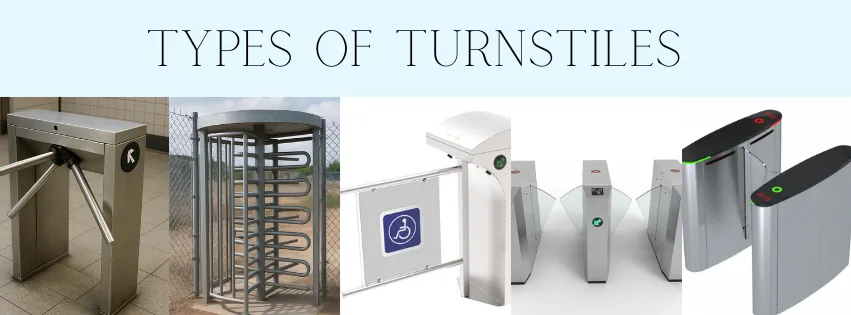
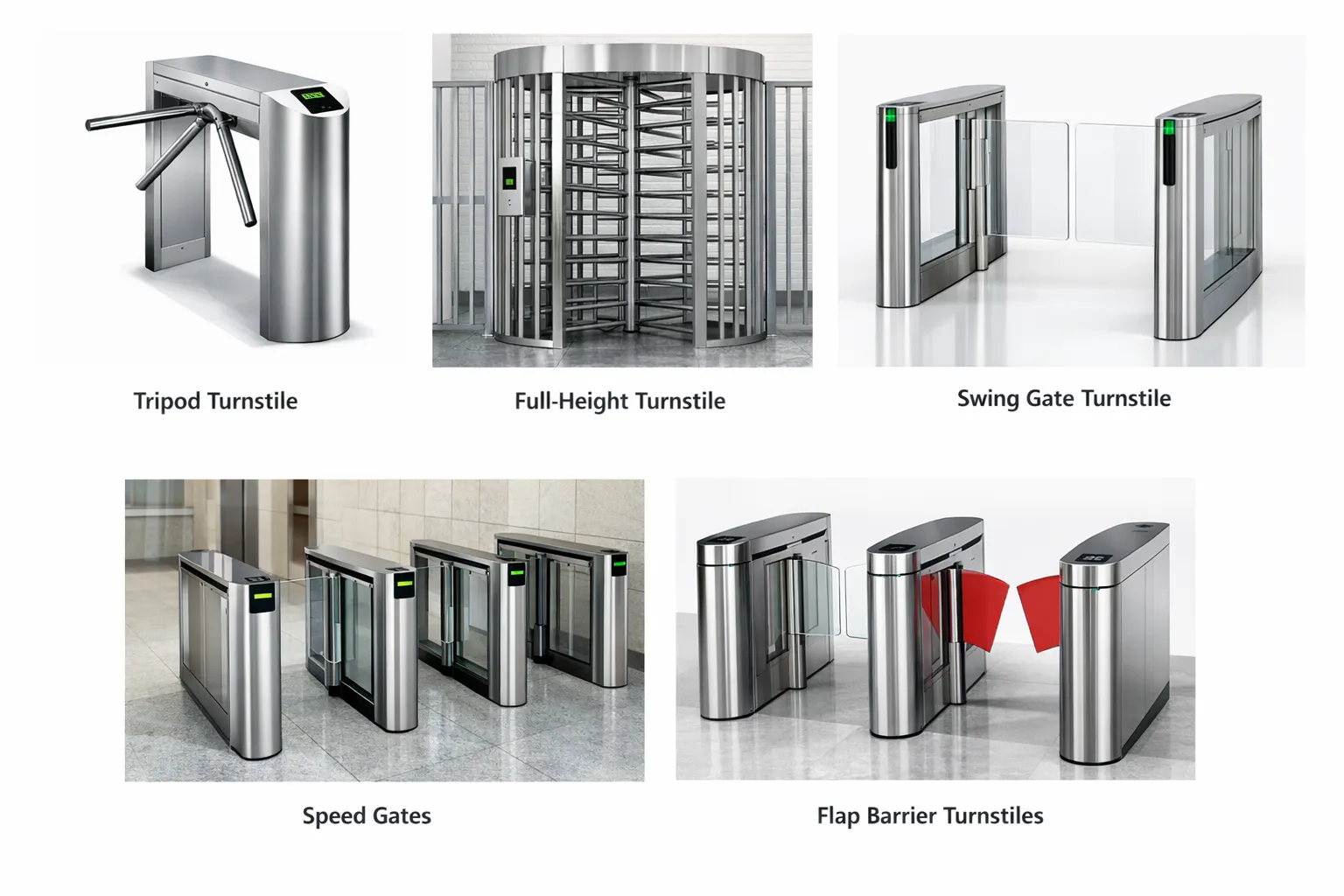
Below is a clear breakdown of the five most commonly used turnstile gate types: Tripod Turnstiles, Full-Height Turnstiles, Swing Gates, Speed Gates, and Flap Barriers.
1. Tripod Turnstile Gates
Tripod turnstiles are the most widely used and instantly recognizable turnstile type. They feature three rotating arms mounted at waist height and are primarily designed for crowd control and basic access management.
Key Characteristics of Tripod Turnstiles
- Waist-high mechanical or semi-automatic design
- One person passes per rotation
- Can operate with tickets, RFID cards, QR codes, or push buttons
Advantages of Tripod Turnstile Gates
- Cost-effective and durable
- Ideal for high-traffic environments
- Simple mechanism with low maintenance
- Fail-safe operation (arms drop during power failure or emergencies)
Limitations of Tripod Turnstiles
- Low physical security
- Can be jumped over or bypassed
- Not suitable for high-security areas
Common Applications of Tripod Turnstiles
- Metro and bus stations
- Stadiums and amusement parks
- Corporate cafeterias
- Gyms and public venues

2. Full-Height Turnstile Gates
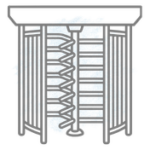
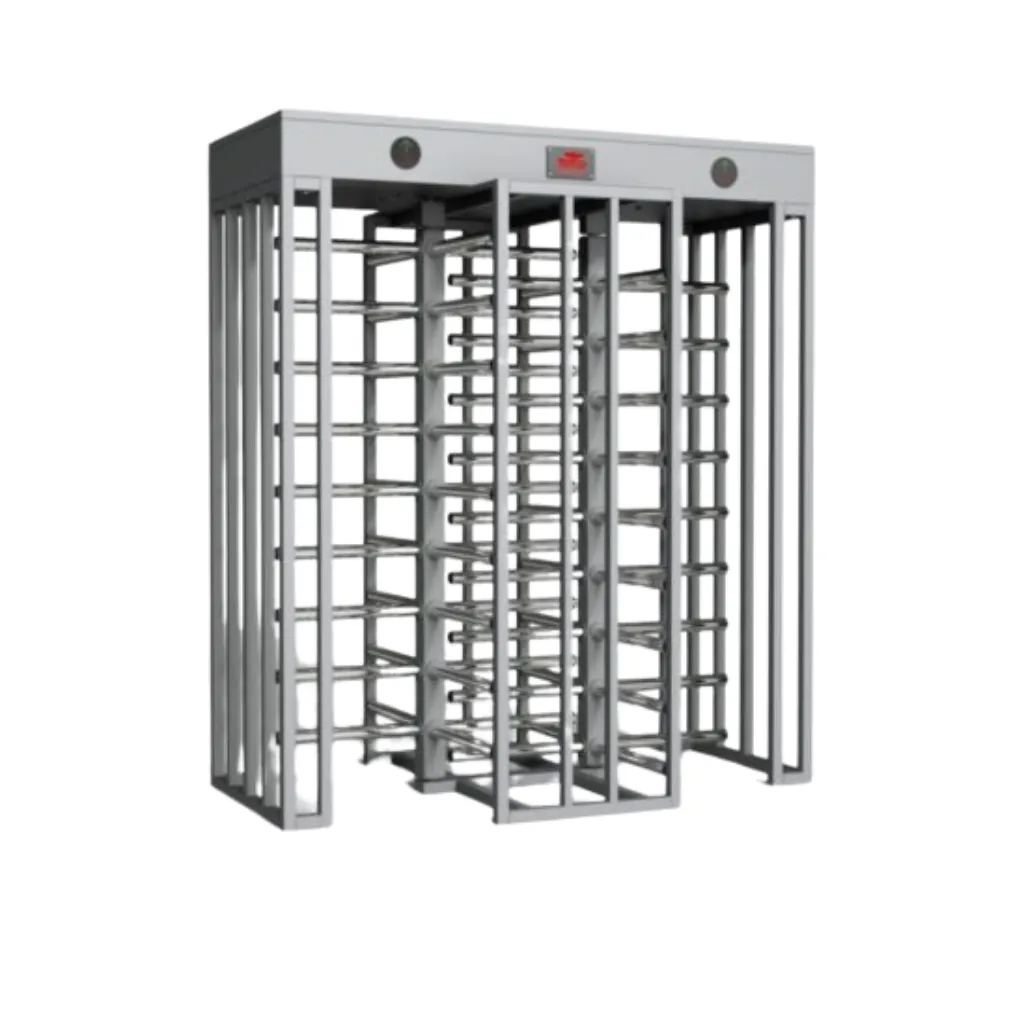
Full-height turnstiles provide maximum physical security by completely enclosing the user from floor to ceiling. These turnstiles prevent climbing, crawling, or tailgating.
Key Characteristics of Full-Height Turnstiles
- Full-body height steel structure
- Rotating cage-style or single-lane design
- One-person-at-a-time access
Advantages of Full-Height Turnstile Gates
- Highest level of physical access control
- Prevents unauthorized entry completely
- Suitable for outdoor and harsh environments
Limitations of Full-Height Turnstiles
- Slower throughput
- Bulky and industrial appearance
- Not suitable for indoor lobbies or premium spaces
Common Applications of Full-Height Turnstiles
- Stadium entrances
- Construction sites
- Power plants and factories
- Warehouses and data centers
3. Swing Gate Turnstiles
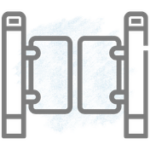
Swing gate turnstiles use a single swinging barrier panel instead of rotating arms. They are often installed alongside other turnstiles to provide wider and more accessible entry lanes.
Key Characteristics of Swing Gate Turnstiles
- Motorized swinging glass or metal panel
- Controlled via access control systems
- Wide passageway
Advantages of Swing Gate Turnstiles
- ADA compliant and wheelchair friendly
- Ideal for carts, strollers, and deliveries
- Clean and modern appearance
Limitations of Swing Gate Turnstiles
- Lower throughput compared to speed gates
- Requires additional space for panel movement
Common Applications of Swing Gate Turnstiles
- Corporate offices
- Hospitals
- Educational institutions
- Accessible entry lanes
4. Speed Gates
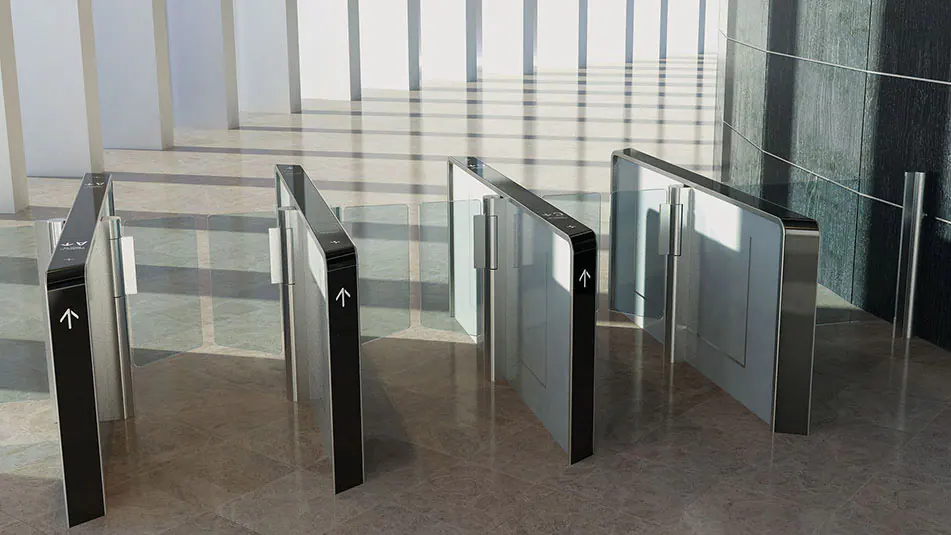
Speed gates are advanced, sensor-based turnstiles designed for fast, secure, and seamless access in modern environments. They rely on optical sensors rather than constant physical barriers.
Key Characteristics of Speed Gates
- High-speed motorized operation
- Optical sensors detect authorized entry
- Anti-tailgating and intrusion detection
Advantages of Speed Gate Turnstiles
- Very high throughput
- Premium, modern aesthetics
- Excellent balance of security and speed
- Easy integration with card readers, biometrics, and mobile credentials
Limitations of Speed Gates
- Higher cost compared to tripod turnstiles
- Requires stable power and system calibration
Common Applications of Speed Gates
- Corporate headquarters
- Commercial buildings
- Airports
- Technology parks

5. Flap Barrier Turnstiles
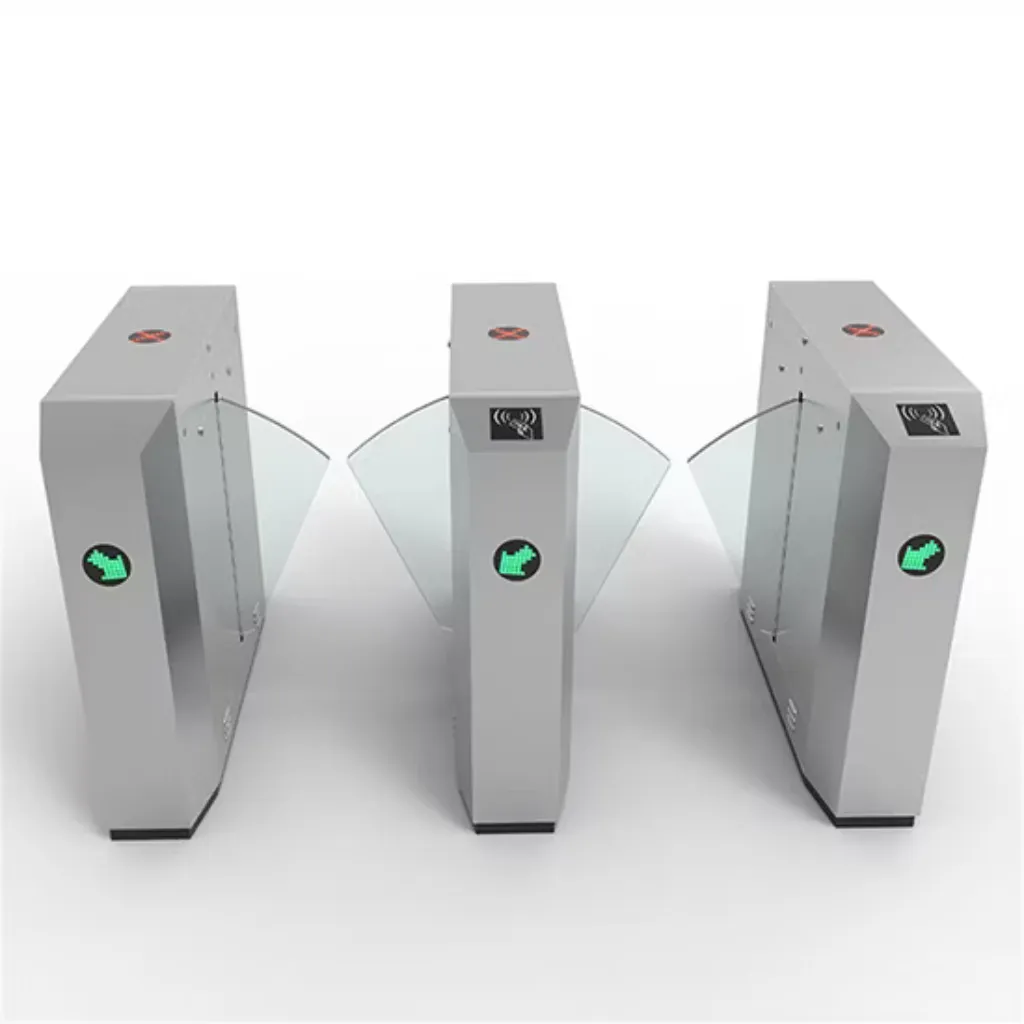
Flap barrier turnstiles are a subtype of speed gates that use retractable glass or acrylic flaps to control access. They are popular in environments where speed and appearance are equally important.
Key Characteristics of Flap Barrier Turnstiles
- Two flaps retract into the cabinet
- Optical sensor-based detection
- Silent and fast operation
Advantages of Flap Barrier Turnstiles
- Fast passage and efficient crowd handling
- Compact design
- Modern and professional look
Limitations of Flap Barrier Turnstiles
- Narrower passage compared to swing gates
- Not suitable for wheelchairs without a companion gate
Common Applications of Flap Barrier Turnstiles
- Office lobbies
- Metro stations
- Banks and business centers
- Government buildings
Quick Comparison of Turnstile Gate Types
- Tripod Turnstile – Best for crowd management and low-cost access control
- Full-Height Turnstile – Best for maximum security and perimeter protection
- Swing Gate – Best for accessibility and wide passage needs
- Speed Gate – Best for fast-moving, high-end environments
- Flap Barrier – Best for stylish, controlled access with high throughput
Every turnstile gate type serves a specific purpose. The right choice depends on how much security, speed, and accessibility your facility requires. In many real-world installations, multiple turnstile types are combined—such as tripod turnstiles with a swing gate—to create a complete, compliant, and efficient access control solution.
By understanding these turnstile gate types clearly, decision-makers can invest in a system that not only controls access but also enhances user experience and operational efficiency.